

Ingredients
Here you’ll find info about the different types of whole grain and gluten-free flour as well as some other not so common ingredients that I use in my baking. And if you live outside of the US, there’s a special section for you!
<h2Whole Grain Flour
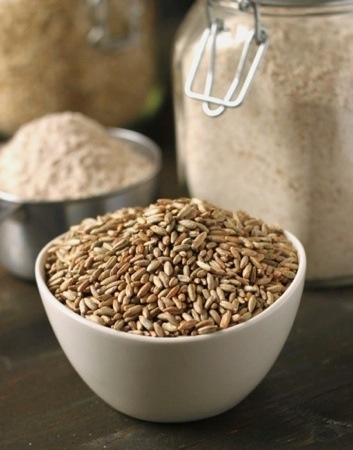
Almost all of my 100% whole grain recipes are developed in a way that you can’t tell that they’re whole grain. There are a few exceptions but I always make that clear in the post. What I normally use is whole wheat flour, which you should be able to find in any grocery store.
I also like baking with whole spelt, which, to me, tastes less healthy. It has more protein than whole wheat flour and it’s more tolerable for people with wheat sensitivities. It is not gluten-free, though. More on gluten-free flour later.
Whole spelt is sometimes just labeled as spelt, but should then say whole grain on the side of the package. If you can’t find whole spelt in your local supermarket, you can order it on Amazon: Bob’s Red Mill Organic Spelt Flour
Good whole grain flours to start off with
If you have someone in your family who doesn’t like whole grains and you’re just starting to switch, one of these might be a better bet:
- Bob’s Red Mill 100% whole grain ivory wheat flour (aka white whole wheat) – this has all the fiber and nutrition that regular whole wheat flour has, but it tastes milder and is lighter in color. It’s made from naturally occurring “albino” wheat, which is the only reason why it’s lighter. It really does have the same nutritional value! If I were starting off with whole wheat baking, I’d start with this flour.
- Bob’s Red Mill whole wheat pastry flour – this is made from a softer type of wheat that has less protein and less gluten. It’s more finely ground and great for cakes and pastries.
For a primer on whole grain baking, please have a look at my whole grain baking tips on GoodLifeEats.
Gluten-free Flours
There’s a wide variety of gluten-free flours but many of them are either not that easy to find or quite expensive to bake with.
Although I do quite a bit of gluten-free baking, I really only use nut flour like coconut flour, buckwheat, and oat flour (which is just ground up oats). I do this because I don’t usually like the baked goods made with all those hard-to-find flours. I also don’t want to start posting recipes that people don’t actually have ingredients for. If you want some more info on those other types of gluten-free flours, here’s an awesome beginner’s guide to gluten-free flours.
One important thing to note is that gluten-free flours are often not interchangeable! I’ve seen commenters complain on other blogs that their muffins, which called for 1/4 cup of coconut flour, didn’t come out when they subbed in regular flour. It just doesn’t work.
Almond flour
Most of the time in my gluten-free baking, I use almond flour. I don’t even like almonds but I love almond flour! Almond flour is made from blanched almonds that are ground really finely.
Almond meal
Almond meal is usually not as finely ground as almond flour, and at least in my experience, is not blanched. If you make a recipe that calls for flour and you decide to use meal, it might work, but it’ll have itty bitty pieces of almond skin in there. For some things where the texture doesn’t matter, it might be okay, but it’s really best to follow the recipe.
Buckwheat
Buckwheat isn’t related to wheat and actually isn’t even a grain, but a seed that’s finely ground like flour. It’s often referred to as a pseudograin or pseudocereal. Because the full seed is ground and nothing is sifted out, it’s considered a whole grain. It seems as though a lot of people are very confused about buckwheat, so if you still have questions, please read the Whole Grain Council’s post on buckwheat.
Coconut flour
Coconut flour is an interesting flour. It soaks up a ton of liquid so you often see it called for in small amounts. It is possible to bake something with coconut flour as the only flour, but I personally don’t like the texture. I love mixing it with almond flour, though. I often use mostly almond flour plus a tablespoon or two of coconut flour. And it’s worth noting again – you cannot sub coconut flour with other types of flour! Not a clear and straight substitution, anyway.
You can read all about coconut flour at Carolyn’s blog All Day I Dream About Food. Carolyn also has tons of other great gluten-free tips and recipes! You can find coconut flour on Amazon: Bob’s Red Mill Organic Coconut Flour
Oat flour
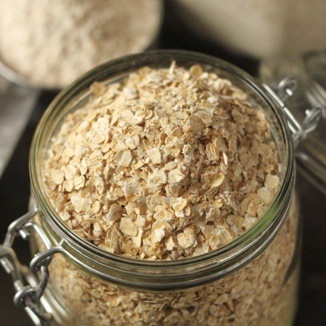
I just use un-contaminated oats and grind them in the coffee grinder until flour consistency. You can also do this in a food processor. If you don’t want to put in that effort, you can easily get it from Amazon: Bob’s Red Mill Gluten Free Oat Flour – 4 22-ounce bags.
Other ingredients
- Coconut oil
- I normally use refined coconut oil, which doesn’t have any coconut taste. If you don’t mind some coconut flavor, the unrefined kind is great!
- Coconut butter
- Store-bought coconut butter is extremely expensive, so I use homemade coconut butter. It is easy to make, try it for yourself!
- Coconut sugar
- Madhava Organic Coconut Sugar
Finding baking ingredients in Germany (lots of this applies to other countries, too)
When I moved here in 2009, it took me a good while to track down all the baking ingredients I was used to from back home in the US. I hope to save you at least some of that pain!
- Almond flour
- I get Suntree Kalifornische Mandelkerne Gemahlen. They come in little 100 gram bags and cost 1.29 EUR at Kaufland. I’ve seen this brand elsewhere. Make sure you get the blanched almond flour and not the almond meal (which has the skin). Do not buy Mandelmehl (which translates to almond flour). This is a different type of flour and any US recipe you find calling for almond flour refers to blanched ground almonds.
- Baking powder
- American baking powder is double-acting and German (and I believe all baking powder around the world except for North America) is single-acting. This sometimes creates a problem. If you can, try getting some of the American stuff from visitors or whenever you visit the US.
- Baking soda
- Baking soda is called Kaisernatron over here. I’ve found small green bags of it in the baking aisle at normal grocery stores and also in random sections at the drugstores Rossmann and DM. They also sometimes have Arm & Hammer at Asian shops but be sure to shake the box. Most of the time, they’re rocky and I don’t know about you, but I’d rather not buy chunky baking soda. Also, try looking on Amazon for buckets of food-grade baking soda in 1 kg or 5 kg buckets!
- Biscoff Spread
- We’re in Europe! See Speculoospasta down below. :)
- Brown sugar
- It is not Brauner Zucker, Rohrzucker, or anything else you can find in a German supermarket. You can only find it at Asian shops or make your own by mixing 1 cup granulated sugar with 1 tablespoon molasses.
- Chocolate
- Forget the things that are called chocolate chips here. They’re expensive and in my experience, and they don’t taste very good. I get Zartbitter blocks from Netto and the other discounters that are 3.50 or 4.00/kg and they’re great. Once baked, I really can’t tell the difference between those and more expensive chocolate.
- Coconut flour
- Available in Alnatura or any other Bio shop (although maybe only the larger shops?). I get the brand Morgenland. It’s now easily found on Amazon.
- Coconut sugar
- I get mine from Metro and it’s about half the price of what you find in the Bio shops. It’s REALLY expensive there. Like 25 EUR/kg. It’s now also easily found on Amazon.
- Cream cheese
- I get the cheap stuff from the discounters and nobody can tell the difference between that and Philadelphia. It’s .89 EUR/300 grams. The problem is that German (and I believe this applies to all areas outside of North America) cream cheese has a lot of extra whey. For some recipes, like icing, you most definitely have to drain it. I’ll note this in the recipes. Normally, it’s best to get almost double the amount the recipe calls for and drain that in a cheesecloth or a thin kitchen towel that won’t leave behind a bunch of fibers.
- Flour, all-purpose
- All-purpose flour is called Weizenmehl Type 550. Ever wonder why your cookies spread totally flat and are super greasy? The standard flour you find everywhere, Type 405, is like American pastry flour. That’s fine for cakes and brownies, but for cookies, bread and crusts, it becomes an issue. For cookies, I normally do half Type 550 and half Type 405. If I post a recipe with white flour (which is very rarely!) I’ll tell you which German type to use.
- Flour, bread
- Look for Type 812 flour. It’s not easy to find but you can make your own by adding 1 tablespoon of vital wheat gluten to every cup of Type 550 flour. I learned this from No Ordinary Homestead. She has lots of other great expat tips for people living in Germany so go check her out!
- Flour, cake
- Cake flour is called Kuchenmehl. It’s found almost everywhere except at the discounters. I get the Wurzener brand.
- Molasses
- I’ve found molasses at the Reformhaus, but it was really expensive. You could substitute the much cheaper and widely available Zuckerrübensirup.
- Speculoospasta
- The Kaiser’s supermarket near my house now carries Biscoff spread! At the moment, it’s in a display near the fruit section, but I expect that they’ll eventually move it next to the peanut butter and other spreads. It’s 2.99 EUR. And they have crunchy! If you don’t live near a Kaiser’s, you can find it online: Speculoospasta from Amazon. In case they are out at the moment, you can get it here.
- Vanilla
- Make your own! There’s no way around it. I’ll get to this issue later, but for now, you can visit the amazing Healthy Foodie for a tutorial. It’s really easy. Go do that now because i†t’ll take a long time for it to be ready!
- Vital Wheat Gluten
- Look for Weizengluten in bio shops and reform houses. And there’s always Amazon if you want a lot of it!
Now that you have all your ingredients, you can go make these more than yummy New York Times Chocolate Chip Cookies adapted for German ingredients. :)
If you have questions about other ingredients, contact me and I’ll add them!
Disclaimer: Some of the links on this page are affiliate links.


