

French Apple Pie
This French apple pie is my pie-pan version of an Alsatian apple tart, with a crisp, flaky crust, creamy vanilla custard and fresh apples. It can be made traditionally or with gluten-free flour.
It’s lighter and less sweet than a typical American apple pie, with vanilla rather than cinnamon letting the apple flavor stand out. That makes it especially nice for Thanksgiving or fall when you want something a little different from the usual heavily spiced apple desserts.
The name “French apple pie” needs a little explanation, though. What Americans often call French apple pie – usually an apple pie with a streusel topping – isn’t a traditional French dessert. This recipe is instead based on a French Alsatian apple tart, adapted to work in a standard American pie pan.

What Is an Alsatian Apple Tart?
Tarte aux pommes alsacienne, or Alsatian apple tart, comes from the Alsace region of France. It combines apples with a creamy egg-and-cream custard in a pastry crust.
Traditionally, the apples are arranged neatly in the tart and the crust is usually pâte brisée or pâte sucrée. After baking, the tart is often brushed with apricot jam for a glossy finish. That combination of fresh apples, vanilla custard and apricot glaze is what inspired this French apple pie.

How Is This a French Apple Pie?
There really isn’t a traditional French dessert called “French apple pie.” This recipe is my adaptation of an Alsatian apple tart, made in a pie pan with an American-style flaky pie crust.
I originally tried making it more like the traditional tart, including arranging the apples in neat concentric circles. It tasted great, but the presentation just didn’t work nearly as well in a pie pan.
I also experimented with the traditional crust options. Against my better judgment, I tried using a pâte brisée recipe for this pie, and I couldn’t cut a single decent slice.
Pâte sucrée, the other traditional choice for an Alsatian apple tart, has a sweet, tender and cookie-like texture. It doesn’t flake but instead has a crumbly, melt-in-your-mouth quality. Incredible for tarts! But I had the same issue when cutting it in a pie pan.

US flaky pie crusts prioritize flakiness, with visible layers that shatter and crunch, which just happens to be perfect for a custard pie.
I’ve had this recipe ready to share for over a year. I first started working on it after I finally came up with a flaky pie crust recipe I loved, this Gluten-Free Pie Crust, which can also be made with all-purpose flour.
I was very excited to use it in this pie, and it worked perfectly. It almost sounded like I was crushing a potato chips bag when I cut through it. I was even able to pick the entire pie out of the pan and hold it in my hands. It’s sturdy!

Ingredients
Please scroll down for the full recipe. These are just notes on select ingredients.
- Pie crust – you can use the homemade crust in the recipe or a store-bought pie crust. If using store-bought, follow the package directions for thawing and blind-baking.
- Vanilla extract – for the custard, you can replace part of the vanilla with almond extract. I’d use up to 1 teaspoon of almond extract.
- Apples – use fresh, crisp, flavorful baking apples rather than older or dried-out apples. See the section below for the varieties I recommend.
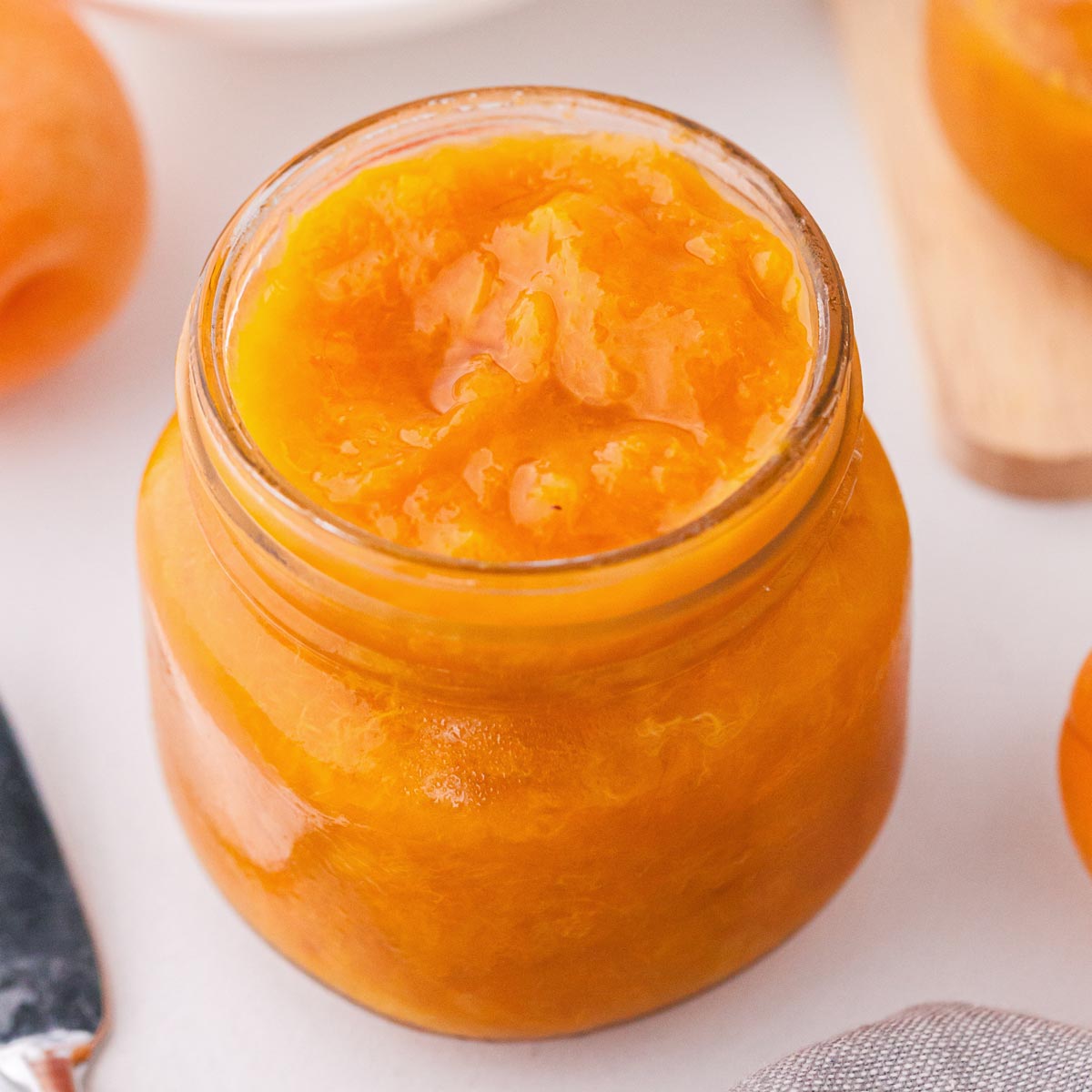
- Apricot jam – this gives the apples their glossy finish. You can use apple jelly instead, but I wouldn’t omit the glaze entirely because the apples look dull without it.

Why no cinnamon?
French apple desserts often emphasize the natural flavor of the fruit, with cinnamon used sparingly or omitted in favor of vanilla, lemon zest, or Calvados (a type of apple brandy).
As someone from the US, it feels wrong not to use cinnamon in an apple dessert. So one of my trials included cinnamon.
It was weird. Skip the cinnamon!
If you want something more traditional for Thanksgiving, these Apple Tartlets have loads of cinnamon flavor and are typically American. And for something even more exciting (but time-consuming!), this Thanksgiving Piecaken is a fun choice.
This French apple pie is for when you’re looking for something lighter and a little different! For a more traditional cinnamon-spiced apple pie, my Gluten-Free Apple Pie has a flaky double crust and can also be made vegan.
And if you want a much easier apple dessert with no crust, my Swedish apple pie is always a hit and super easy to make.
What type of apples to use
The best apples for this apple pie, or any baked apple dessert, are those that strike a balance between sweetness and tartness while holding their shape during baking. Here are some excellent options:
- Granny Smith – their tartness contrasts beautifully with the sweet custard, and they stay firm when baked. I personally prefer something sweeter, like one of the below choices.
- Honeycrisp – slightly sweeter than Granny Smith, with a crisp texture that holds up well in the oven.
- Golden Delicious – if you’re looking for a tender but not mushy apple in baked dishes, this is a solid option. They’re sweet with just a hint of tartness.
- Braeburn – a mix of tart and sweet flavors with a firm structure, making them ideal for elegant presentations. You don’t want to bake with mushy apples that shrivel and become unappetizing-looking while baking.
- Pink Lady – tangy with a hint of sweetness and excellent firmness.
You can also experiment by mixing apple varieties for a more complex flavor profile. For instance, pairing a tart apple like Granny Smith with a sweeter one, such as Honeycrisp, can elevate the overall taste of the tart.
Using up old apples for baking works just fine in recipes like Apple Crumble or Healthy Cinnamon Apple Muffins, but not this one.
Since this pie doesn’t rely on heavy spices like cinnamon or nutmeg or a lot of brown sugar, as many US apple recipes do, the quality of the apples is really important. Be sure to use fresh, flavorful apples that are crisp and juicy.
Avoid older, dried-out apples or ones that lack flavor. The apples are the star of the show here, so their taste and texture will directly impact the success of your pie.
How to make it
Here’s an overview of how to make it.

- Prepare and chill the pie dough, then roll it out and fit it into a standard 9″ (23 cm) pie pan.
- Freeze the shaped crust, then blind-bake until the bottom is dry and starting to brown. Let it cool completely.
- Mix the custard, prepare and score the apples, then arrange them in the cooled crust.
- Pour the custard around the apples and bake until the center is set.
- Brush the apples with the apricot glaze, cool completely, then chill before slicing.


What pie pan to use?
You need a standard 9″ (23 cm) pie pan and NOT a deep dish. I tried that, and it wasn’t enough filling or crust for a deep dish.
How to prepare the apples
Making neat concentric circles of apple slices didn’t work for me. Neither did coring and slicing the apples and then reassembling them neatly in the pan.
If that doesn’t make sense, look at how the apples look in the pie. That’s what I mean.
What you’re going to do is score the apples by making shallow cuts into the apples without slicing all the way through.
This technique is often used to add a decorative element to desserts, but more importantly, to help apples cook more evenly by allowing steam to escape.
Do I have to blind-bake the crust?
Yup. If you want the crust to be baked through and not soggy.
This recipe works great in certain recipes, like this Cocoa Pecan Pie, without blind-baking. It somehow magically gets crisp.
In this apple pie recipe, however, the non-blind-baked crust came out pale, wet and flavorless.

How to make ahead and storage
This isn’t the best make-ahead dessert for Thanksgiving, but you can prepare the crust in advance. However, I recommend baking the pie on the day of serving to ensure the crust is at its best.
You can make the dough 2 days in advance and keep it refrigerated until ready to use. If you’d like to bake the pie crust and then fill it the day of serving, this is what to do.
- Let the prebaked pie crust cool completely at room temperature to reduce the risk of condensation forming inside the storage container.
- Wrap the crust tightly in plastic wrap or aluminum foil, then place it in a Ziploc bag. Ensure it’s well-sealed to protect it from air and moisture.
- Store the crust at room temperature for up to 3 days or freeze it for up to 2 months.
- To use the frozen pie crust, thaw it in the refrigerator for several hours or overnight. Thawing at room temperature can cause condensation to form as the crust warms, especially if it was frozen. This moisture can seep into the crust, making it soggy, particularly at the base. Thawing in the fridge allows the crust to warm slowly, reducing condensation and keeping it crisp.
You don’t want to cut up the apples in advance, but you can mix up the custard a day before baking the pie. It has raw eggs in it, so you don’t want to prepare it too far ahead of time.
Once the baked pie has cooled completely, cover and refrigerate it for up to 3 days.
Troubleshooting
If things don’t go as planned, these tips can help for next time. Or you can read them now to avoid issues. :)
- Soggy crust – ensure the crust is blind-baked thoroughly and cooled before adding the filling.
- Custard not setting – bake the pie until the custard no longer jiggles in the center.
- Apples sinking – score the apples thinly and arrange them tightly in the pie pan to keep them from shifting during baking.

Don’t Live in the US?
If you’re outside the US, I recommend using a pie crust recipe developed for the flour available in your country rather than substituting your local flour directly into my crust recipe.
I’ve tested both Swedish and German flour in this pie crust, and neither worked as a direct replacement for US all-purpose flour. Even when the protein percentage looks similar, the flour can absorb liquid and behave differently.
So for this French apple pie, use a local flaky pie crust recipe that you know works well with your flour, then follow the filling and baking directions here.
Gluten-free version
You’ll need to use Bob’s Red Mill 1-to-1 Gluten-free Baking Flour. The resulting crust is the flakiest and best I’ve ever had!
If you use another brand, please know you probably won’t have the same results.
I hope you’ll enjoy this French apple pie! If you try it out, I’d love to hear your thoughts below in the comments. Thanks! :)

French Apple Pie (Apple Custard Pie)
Ingredients
For the crust:
- 1 1/4 cups (156 grams) flour see notes
- 1/2 teaspoon sea salt
- 1 tablespoon granulated sugar
- 1/2 cup (113 grams) unsalted butter cut into 8 pats
- 1 teaspoon cold vanilla extract see notes
- 1/2 teaspoon cold apple cider vinegar
- 3 to 5.5 tablespoons cold water see notes
- pie weights or beans
Filling:
- 2 large eggs
- 2 egg yolks
- 1 cup (236 ml) heavy cream
- 1/2 cup (100 grams) granulated sugar
- 1/8 teaspoon salt
- 2 teaspoons vanilla extract
- 3-4 medium baking apples your choice
Topping:
- 1/3 cup (95 grams) apricot jam smooth, not lumpy
- 2 tablespoons water
Instructions
Make the crust:
- Get out a standard 9” pie plate. Do not grease it.
- To the bowl of a food processor fitted with an S-blade, add the flour, salt and granulated sugar. Pulse a few times.1 1/4 cups (156 grams) flour, 1/2 teaspoon sea salt, 1 tablespoon granulated sugar
- Turn it to the lowest speed and dump in the butter. Process just until you have pea-sized bits of butter. Don’t overprocess! Stop pulsing.1/2 cup (113 grams) unsalted butter
- Evenly drizzle the vanilla extract and apple cider vinegar over the top.1 teaspoon cold vanilla extract, 1/2 teaspoon cold apple cider vinegar
- Turn on the lowest speed and pour in 3 tablespoons of water. Process very briefly until it looks like it’s coming together. It’ll look shaggy and not like a uniform ball. Pinch some together. If it stays together without being crumbly, it’s ready. If you think it needs a bit more water (it almost certainly will), add more water, 1-2 teaspoons at a time. If you think you can form a disc with it without it falling completely apart into a thousand crumbs, that’s another clue it’s ready.3 to 5.5 tablespoons cold water
- Place the dough in the center of a large piece of plastic wrap and wrap it up into a flat disc, about 1” or a little less. If you can’t form a disc because it’s nothing but crumbs, it needs a little more water.
- Refrigerate for at least 45 minutes and up to 2 days.
- Very lightly flour a piece of parchment paper and place the unwrapped dough on there. Sprinkle a tiny bit of flour over the top of the dough.
- Place the plastic wrap or another piece of parchment paper on top of the dough and roll it out so that it’s about ½” wider than the top of your pie plate.
- Remove the piece of plastic wrap or parchment covering the pie crust, place the pie pan on top of the dough, and then flip over the dough and pan. Press the dough down around the edges at the bottom of the pan and then remove the piece of parchment paper.
- Trim the dough, if needed, and crimp the edges. The dough should go all the way up the edges and be crimped along the rim, like in the GF pecan pie.
- Cover loosely with plastic wrap so that ice crystals from the freezer don’t fall in. Place in the freezer (not the fridge!) for 45 minutes. When there are 15 minutes left on the clock, preheat the oven to 400 °F (205 °C). Place a baking sheet on the baking rack that will fit your pie.
- Line the crust with a piece of parchment paper and then fill with pie weights/ beans. A lot of sites say you need to fill them all the way to the top of the pan, but I just did the bottom, and it was fine.
- Carefully place the pan on the now very hot baking sheet and bake for 20-23 minutes or just until you see the tops of the crimped edges starting to very lightly brown.
- Remove the pan from the oven. Remove the parchment paper and weights and bake the crust for another 5-7 minutes or until the bottom of the crust is dry and starting to brown. You can now turn off the oven and turn it on again in 15 minutes, or just keep it running.
- Remove the pan from the oven and place on a wire rack to cool completely – about 30 minutes. After about 15 minutes of cooling, start preparing the filling and turn the oven to 325 °F (163 °C).
Prepare the filling and apples:
- In a medium mixing bowl, stir together all the filling ingredients except the apples. Set aside.2 large eggs, 2 egg yolks, 1 cup (236 ml) heavy cream, 1/2 cup (100 grams) granulated sugar, 1/8 teaspoon salt, 2 teaspoons vanilla extract
- Peel, core and either halve or quarter your apples. It’ll depend on how big they are. Then score the tops of the apples, lengthwise, being careful not to cut all the way through the apples, which would make slices. Place the apples, scored side up, in two concentric circles (so an outer and inner circle).3-4 medium baking apples
- Pour the filling over the top. Be sure not to pour it on or over the sides of the crust.
- Bake for 40-50 minutes or until the middle is set and doesn’t appear raw.
- Place on a wire rack to cool completely, about 1 to 2 hours. After 20 minutes of cooling, stir the apricot jam and water in a small saucepan over medium heat. Cook for a few minutes, stirring often, until well combined. Use a fine mesh sieve to get rid of any lumps, if necessary. Brush over the apples.1/3 cup (95 grams) apricot jam, 2 tablespoons water
- After it’s completely cooled, place in the fridge for 2 hours to firm up more, allowing for a cleaner slice.
- Cover and refrigerate for up to 3 days.
Notes
- I put the vanilla and apple cider vinegar together in a tiny bowl in the freezer for about 10 minutes, and the same with the water. I don’t put the vanilla/ACV and the water together in the same bowl because you might not use all the water.
- The amount of water you need will depend on how cold your ingredients, kitchen, etc. are. I’ve made this several times with the same brand of ingredients, and have needed between 3.66 and 5.5 tablespoons.
- For the flour, you can use all-purpose flour or for gluten-free, use 1 1/4 cups (173 grams) Bob’s Red Mill 1-to-1 Gluten-free Baking Flour + tiny bit more for flouring.
- The nutrition information provided is calculated as a courtesy and is only an estimate. I am not a licensed nutritionist or dietitian. For the most accurate nutritional data, consult a professional or use your preferred calculator.



Your posts are always so long but helpful. Thank you for taking the time to write all the details out. I was scared to make a pie but you made it not as scary. 😄 We made this on an apple baking day and just loved it. I’ll be making it again for company next week!
Haha. I know this post got kind of long but there was so much to say. ;) I’m happy it didn’t turn you off and that you still made the pie and liked it! Thanks a bunch for your comment.
Hello from an actual French person! Thank you for doing your research and not creating nonsense and calling it French. You’re right that there’s no French apple pie, but my neighbor made this, and I had to come and praise you for it. I’m going to make it myself for Thanksgiving to bring a little French flare to the table. I have had enough of heavy cinnamon apple pies. 😆 The crust was wonderful. Really amazing recipe. Again, thank you.
Oh, wow. Thanks so much! I really appreciate you taking the time to comment. Seeing a bunch of Americanized “French” recipes must drive you crazy. 🙃 I’m really happy you liked the pie enough to make it yourself! Thanks again for your kind words. 😁
How could I incorporate some brandy or bourbon into this?
I made this and your crustless pumpkin pie and loved them both. I don’t normally eat crust but this was incredible. I used regular flour. I loved how buttery and crunchy it was. And the custard filling was perfect. I love your made-up pie. ????
Oh, yay! So glad that the crust was a hit. I didn’t like crust before that recipe, either! Thanks for the kind words about my made-up pie. ;) Happy Thanksgiving!